Mastering Content Calendar Planning for Consultants: A 30-Day Blueprint
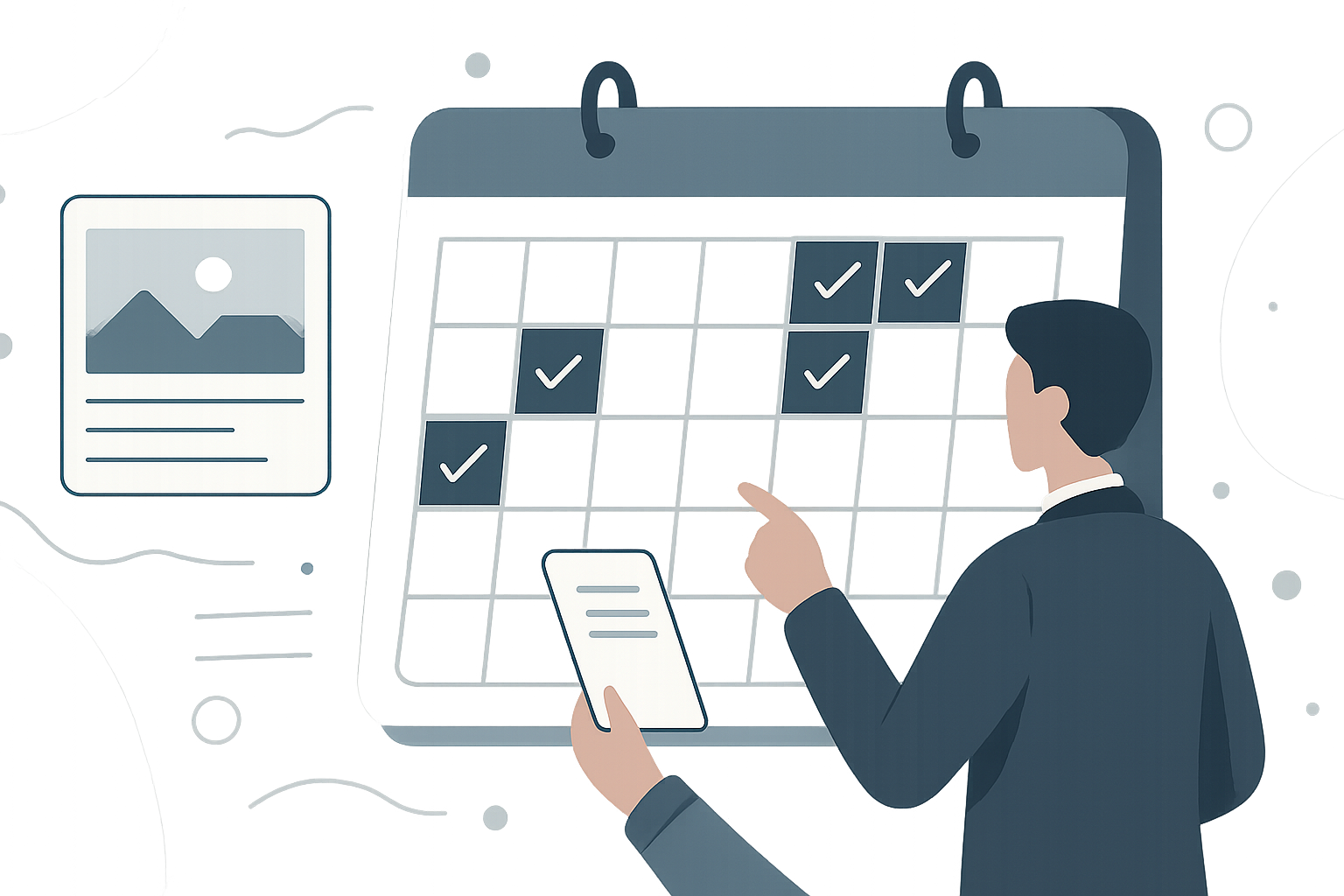
A 30-day content calendar helps consultants plan, prioritize, and measure content so each piece advances a specific business objective and serves a defined target audience. It creates a repeatable workflow for ideation, production, publication, and performance review so you can keep content consistent and improve it with data.
Key takeaways
- Begin by identifying your target audience and their needs, then organize the schedule with tools like Google Calendar or Trello and use a mix of content types such as blog posts, videos, and podcasts.
- Set SMART goals and ensure every content item aligns with those objectives and with client or business priorities.
- The recommended 30-day template divides work by week: week 1 for ideation and research, week 2 for drafting and visuals (use tools like Canva), week 3 for scheduling and automation (use Hootsuite or Buffer), and week 4 for analyzing performance and optimizing.
- Best practices include keeping the calendar flexible, involving team members or clients in planning, and conducting monthly reviews to keep content relevant and aligned with goals.
- Real examples in the article show measurable results: a firm using a calendar for webinar planning increased attendance by 30%, and a consultant grew a newsletter subscriber base by 50% in three months.
Mastering Content Calendar Planning for Consultants: A 30-Day Blueprint
In the fast-paced world of consulting, staying organized and ahead of the content game is essential. For consultants, effective content calendar planning is not just about scheduling posts; it's about crafting a strategy that resonates with your audience and aligns with your business goals. This article will delve into the intricacies of content calendar planning for consultants, providing a comprehensive 30-day plan to help you streamline your content strategy. We'll explore best practices, common challenges, and actionable insights to elevate your consulting business.
1. Understanding the Basics of Content Calendar Planning for Consultants
Before diving into content calendar planning for consultants, it's crucial to understand what it entails. Essentially, a content calendar is a roadmap that outlines your content creation and publication schedule. For consultants, this means planning content that aligns with client needs, industry trends, and personal expertise.
- Practical point 1: Begin by identifying your target audience and their specific needs. This sets the foundation for your content strategy.
- Practical point 2: Use tools like Google Calendar or Trello to organize your content schedule. These platforms offer flexibility and can be customized to fit your workflow.
- Practical point 3: Incorporate a mix of content types, such as blog posts, videos, and podcasts, to keep your audience engaged and cater to different preferences.
For more insights on leveraging AI in content creation, consider exploring the AI and the Future of Content Marketing: A Dynamic Discussion.
2. Setting Goals and Objectives for Your Content Calendar
Effective content calendar planning for consultants starts with setting clear goals and objectives. This step ensures that your content strategy aligns with your business aspirations. Consider what you aim to achieve, whether it's increasing brand awareness, generating leads, or establishing thought leadership.
- Goal setting: Define specific, measurable, achievable, relevant, and time-bound (SMART) goals.
- Objective alignment: Ensure that each piece of content aligns with your overarching business objectives.
For more strategies on optimizing your content systems, check out Optimizing Your LinkedIn Content Systems for Teams: A Complete Guide.
3. Crafting a 30-Day Content Calendar Template
Creating a 30-day content calendar template is a practical way to organize your content pipeline. This template should include key details such as content type, publication date, target audience, and distribution channels.
- Week 1: Focus on ideation and brainstorming. Gather insights from industry reports and client feedback to fuel your content ideas.
- Week 2: Develop content drafts and visuals. Leverage tools like Canva for designing compelling graphics that enhance your content.
- Week 3: Schedule and automate your content using platforms like Hootsuite or Buffer. Automation saves time and ensures consistency.
- Week 4: Analyze and optimize. Use analytics tools to assess content performance and refine your strategy based on data insights.
4. Real-World Examples of Successful Content Calendar Planning
To illustrate the impact of effective content calendar planning for consultants, let's explore some real-world examples.
- Example 1: A consulting firm specializing in digital transformation used a content calendar to launch a series of webinars. By planning topics and promotion strategies in advance, they achieved a 30% increase in attendance.
- Example 2: An independent consultant focused on leadership coaching implemented a monthly newsletter. By aligning content with industry trends, they grew their subscriber base by 50% within three months.
For further inspiration, explore how AI is revolutionizing business content in our interview about unlocking local visibility.
5. Best Practices for Content Calendar Planning
Implementing best practices in content calendar planning consultants can significantly enhance your content strategy’s effectiveness.
- Best Practice 1: Maintain flexibility. While having a plan is essential, be ready to adapt to emerging trends and feedback.
- Best Practice 2: Collaborate with stakeholders. Involve team members or clients in the planning process to gather diverse perspectives.
- Best Practice 3: Regularly review and update your calendar. A monthly review ensures your content remains relevant and aligned with business goals.
For more insights into creating effective content strategies, visit ContentPod.
6. Common Mistakes in Content Calendar Planning and How to Avoid Them
Despite best efforts, content calendar planning consultants can encounter challenges. Here are common pitfalls and how to overcome them:
- Overloading the calendar: Avoid cramming too much content into a short period. This can lead to burnout and decreased quality.
- Ignoring analytics: Use data to inform your strategy. Regularly check metrics like engagement rates to tailor your content effectively.
- Lack of consistency: Establish a publishing routine to keep your audience engaged and build credibility.
For more on overcoming challenges in content marketing, refer to Content Marketing Institute's comprehensive guide.
Conclusion: Making the Most of Content Calendar Planning for Consultants
Effective content calendar planning for consultants is a powerful tool that can elevate your consulting business. By understanding your audience, setting clear goals, and implementing best practices, you can create a content strategy that resonates and drives results. As you embark on this planning journey, remember to remain flexible and adapt to industry changes. For further advice and solutions, explore resources at ContentPod.
Frequently Asked Questions
What is content calendar planning for consultants?
Content calendar planning for consultants involves organizing and scheduling content creation and publication to align with business goals and audience needs. It helps consultants maintain consistency and relevance in their content strategy.
How can content calendar planning benefit consultants?
Effective content calendar planning allows consultants to streamline their content strategy, ensuring timely and relevant content delivery. It helps in managing resources efficiently and aligning content with business objectives.
What tools are recommended for content calendar planning?
Tools like Google Calendar, Trello, and Hootsuite are popular for content calendar planning. They offer features that help in scheduling, collaboration, and automation, making the planning process more efficient.
References & Further Reading
- What is Content Marketing?
- How to Create an Editorial Calendar in 3 Easy Steps
- Content Marketing Strategy: A Comprehensive Guide
- How to Create a Content Calendar
Share this post
You Might Also Like
Discover more content tailored to your interests
 Highly Relevant
Newsletter Growth Marketing Teams: Practical Playbook
A newsletter growth marketing team is a repeatable operating model that combines audience targeting, signup conversion, editorial planning, and performance review into one shared workflow to attract qualified subscribers, retain attention, and produce measurable business results. For the model to work, teams must define a clear audience and a primary growth outcome before deploying tactics.
Read More Highly Relevant
Content calendar planning for B2B: mistakes to avoid
Align your calendar to recurring buyer questions and buying-stage needs so each asset helps prospects compare options, reduce implementation risk, or move closer to purchase. Pick a sustainable cadence of fewer, stronger pieces and make the calendar a repeatable operating system rather than a collection of urgent one-offs.
Read More Highly Relevant
newsletter growth saas companies complete guide 2026
Newsletter growth for SaaS means growing qualified email subscribers who support activation, retention, pipeline, and revenue rather than chasing list size alone. The most effective approach pairs a clear subscriber promise with targeted signup paths, useful content and segmentation, and measurement that links to business outcomes.
Read MoreReady to create amazing podcast content?
Choose a plan and start generating professional podcast content with AI
View Pricing Plans